Hardwood Flooring Installation Cost: What to Expect Per Square Foot
I'll be honest — when I first started researching hardwood flooring installation cost for my living room, I was completely overwhelmed. Some contractors quoted me $6 a square foot. Others wanted $18. Same type of floor, same room. So I spent about three weeks talking to flooring contractors, reading Reddit threads at 11pm, and walking through Home Depot asking very annoying questions. Here's everything I learned.
The national average for hardwood flooring installation in 2026 runs between $6 and $12 per square foot, installed — materials plus labor bundled together. That means a 300 sq ft living room will run you roughly $1,800 to $3,600, start to finish. But that range is basically useless without context, because a ton of variables push you toward the low end or the high end.
Average Hardwood Flooring Installation Cost Breakdown
The best way to understand what you're actually paying for is to split it into two buckets: materials and labor. Most homeowners underestimate both.
Materials: What Wood Type Actually Costs
Not all hardwood is created equal. I was originally set on red oak because it's what my grandmother had in her house in Ohio. Turns out it's also one of the more affordable options — a nice bonus.
- Red Oak: $3–$6/sq ft (materials only) — still the most popular hardwood in US homes
- White Oak: $4–$7/sq ft — slightly harder, stunning with matte finishes, trending big in 2025–2026
- Maple: $4–$7/sq ft — incredible durability, common in kitchens and high-traffic hallways
- Hickory: $3.50–$6.50/sq ft — the toughest domestic hardwood, great for families with dogs
- Brazilian Cherry (Jatoba): $7–$12/sq ft — rich color, extremely dense, but pricey
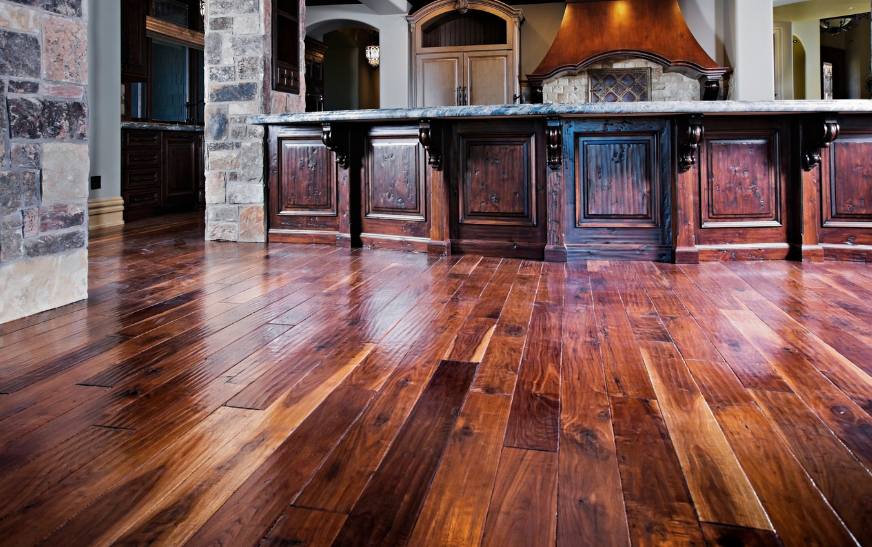
- Walnut: $8–$14/sq ft — the luxury option, gorgeous grain, premium pricing to match
Engineered hardwood, by the way, runs cheaper — usually $2.50–$10 for materials — and it's worth considering if you're in a high-humidity basement or over radiant heat. It's real wood on the surface, just not all the way through.
How Room Size Changes Your Per-Square-Foot Rate
Contractors charge less per square foot for larger jobs. A 150 sq ft bedroom and a 900 sq ft open-plan living area don't just cost proportionally more — the bigger job usually comes in cheaper per square foot because setup and mobilization costs get spread across more area.
- Small room (100–200 sq ft): $900–$2,400
- Medium room (300–500 sq ft): $1,800–$6,000
- Large open-plan space (600–1,000 sq ft): $3,600–$12,000
- Whole-home project (1,500–2,500 sq ft): $9,000–$30,000
And yes, the high end of that whole-home range is real. If you're in San Francisco doing reclaimed walnut with custom staining, $30,000 isn't shocking at all.
Labor Costs: What You're Actually Paying Installers
Labor typically adds $3–$8 per square foot to your total. Sounds like a wide range — it is. Here's what moves that number.
Installation method matters a lot. Nail-down installation (the classic approach for solid hardwood) is usually the cheapest. Glue-down costs more because it's messier and slower. Floating installation (common for engineered hardwood) is often faster and can run cheaper in labor. I went nail-down for my living room, and my contractor charged $4/sq ft for the labor alone.
Speaking of which — I was quoted $3.75 by one contractor and $7.50 by another for essentially the same job. I called three more and averaged them. That's how you find the real market rate in your area.
Geographic location changes labor rates dramatically. A flooring installer in rural Tennessee might charge $2.50–$3.50/sq ft. That same job in Seattle or NYC? Figure $6–$9. Sometimes more. There's nearly a $20/hour gap between the median installer wage in Mississippi versus Massachusetts, according to Bureau of Labor Statistics wage data.
DIY Hardwood Flooring: Real Savings or a Nightmare?
OK so this is where I'll give you my actual opinion, not the balanced "it depends" answer.
DIY hardwood installation can save you $1,500–$5,000 on a typical room. That's real money. But the learning curve is steep, the tools aren't cheap to rent, and a mistake on expensive hardwood costs more to fix than you saved in the first place. I'd done tile work before — grout, backsplash, the works — and I still messed up the first three rows of my living room floor before I got my technique right.
Tools You'll Need (and What They Cost to Rent)
- Pneumatic flooring nailer: ~$50–$80/day rental
- Miter saw: ~$40–$60/day rental
- Table saw or jigsaw: ~$30–$50/day rental
- Floor roller (for glue-down): ~$25–$40/day rental
- Moisture meter: Buy one — they're $20–$30 at Home Depot and critically important before install
Total tool rental for a weekend DIY project: $150–$250. Add your materials, and you're looking at real savings versus hiring out — but only if the installation goes smoothly.
When DIY Actually Makes Sense
Go DIY if you're installing engineered hardwood using a floating method in a simple rectangular room with no weird angles, stairs, or existing floor height issues. That's about as forgiving as it gets. Solid hardwood, nail-down, with doorway transitions and closets and odd corners? Hire someone. Seriously.
Hidden Costs Nobody Mentions Upfront
This is the part that burns people. The quote said $6/sq ft installed. The final bill said something else. Here's what sneaks in:
Subfloor prep. If your existing subfloor is uneven, squeaky, or damaged — and a lot of them are, especially in older homes — contractors charge extra to level and repair it. Figure $1–$3/sq ft additional depending on severity. My subfloor had a low spot in one corner that added $280 to my final bill.
Old floor removal. Got carpet? Vinyl? Existing hardwood? Most contractors charge $1–$3/sq ft to tear out and haul away the old flooring. It adds up fast on big projects.
Acclimation time. Hardwood needs to sit in your home for 3–7 days before installation to adjust to your humidity levels. It won't cost you money, but it costs you time. Plan for this — don't schedule installation the day after delivery.
Stair installation. If you've got stairs, budget separately. Hardwood stair installation runs $50–$150 per step, and a typical staircase has 13–17 steps. That's potentially an extra $1,000–$2,500 that wasn't in your original quote.
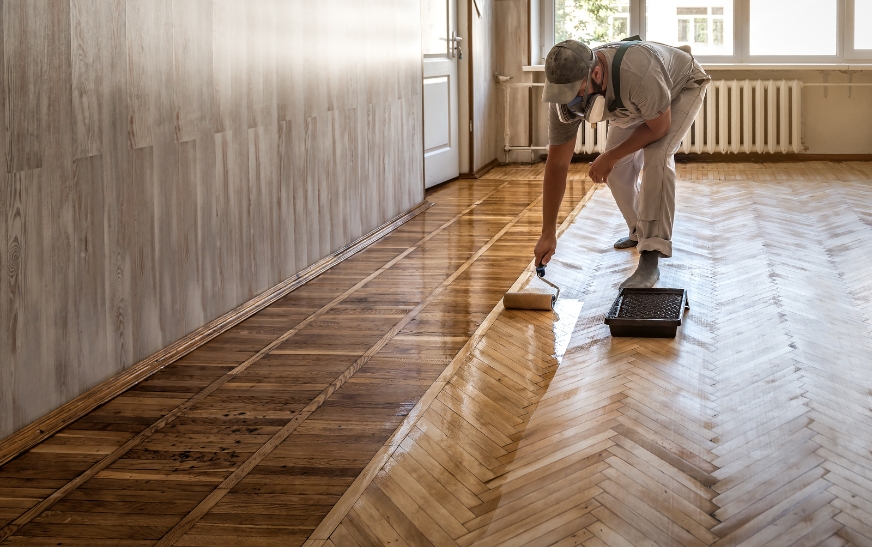
Finishing and staining. Some hardwood comes prefinished — ready to install straight from the box. Unfinished hardwood requires sanding and finishing after installation, adding $2–$5/sq ft. The benefit is a custom stain color. The downside is you won't walk on that floor for 2–3 days while it cures.
How to Stretch Your Flooring Budget Without Cutting Corners
A friend of mine redid her entire first floor last year — about 1,100 square feet of white oak — and came in $3,200 under her initial estimate. Here's what she did differently.
Buy direct from a distributor. Big box stores like Home Depot and Lowe's are convenient but rarely the cheapest option for hardwood. Flooring distributors — the kind that typically sell to contractors — will often sell to homeowners at better rates, especially on orders over 500 sq ft. My friend found a local distributor in Phoenix and saved about $1.80/sq ft on her white oak. That's nearly $2,000 on her project.
Get at least four quotes. Not three — four. The range between the lowest and highest contractor quote is often 40–60% on the same job. I've seen it firsthand, and so has every contractor I've talked to. The first quote is never the best one.
Always buy 10% extra. Order 10% more flooring than your measured square footage to account for cuts, waste, and future repairs. Some people buy exact and run out — then find their lot is discontinued. Add the buffer upfront. It's cheaper than chasing discontinued stock six months later.
Consider off-season timing. Flooring contractors are often slower in January and February. That's when you have more negotiating power. Summer installs — especially before school starts — are peak demand. Wait if you can.
Hardwood Flooring Costs Vary Wildly by State
This genuinely surprised me when I dug into the data. The same hardwood floor can cost dramatically different amounts depending on where you live — not just because of labor rates, but also regional shipping costs, local building codes, and market competition.
- Mississippi, Alabama, Arkansas: $4.50–$7.50/sq ft installed — consistently the most affordable states
- Texas, Tennessee, Georgia: $5–$9/sq ft — solid mid-range options with competitive contractor markets
- Ohio, Indiana, Missouri: $5.50–$9.50/sq ft — Midwest pricing is generally reasonable
- Colorado, Arizona, Nevada: $6–$11/sq ft — growing demand is pushing prices upward
- New York, New Jersey, Connecticut: $8–$14/sq ft — high labor costs, dense urban markets
- California, Hawaii: $9–$16/sq ft — highest in the country, especially the Bay Area and Los Angeles
So if you're remodeling in a mid-size city in Tennessee and your cousin in Seattle quotes his flooring project cost as a comparison point — ignore it. You're in completely different markets.
Is Hardwood Flooring Worth the Investment in 2026?
Short answer: almost always, yes. Hardwood flooring refinishing recouped roughly 147% of its cost on resale in recent market analyses — among the highest ROI of any flooring project. New hardwood installation typically recoups 70–80% at resale, still well above most home improvement projects.
Beyond the money, there's the daily quality-of-life factor. I've had my living room floors down for about two years now. I refinished some light scratches last spring with a weekend sander rental. The floor looks better than the day I installed it. That's the thing about hardwood — it ages beautifully. Carpet deteriorates. LVP can delaminate. Hardwood, maintained properly, can outlive the house it's in.
If you're on the fence about whether hardwood flooring installation cost fits your budget, start with a single room. Get quotes from four contractors, do your subfloor prep homework, and pick a wood species that fits your lifestyle — not just the one that looks prettiest in the showroom. That's how you get a floor you're still happy with fifteen years from now.

Check latest article from this author !
Hardwood Flooring Installation Cost: What to Expect Per Square Foot
November 25, 2026